Inside the AWS EFS CSI Driver: What Really Happens When a PVC Is Created?
A deep dive into the AWS EFS CSI Driver architecture, explaining the complete workflow when a Kubernetes PVC is created—from filesystem and mount targets to access points and dynamic provisioning.
When I first started working with the AWS EFS CSI Driver on EKS, I had a number of questions:
- Why can the CSI Driver be installed before an EFS filesystem exists?
- Does the CSI Driver create Mount Targets automatically?
- What’s the difference between a Mount Target and an Access Point?
- For static provisioning, do I still need the CSI Driver?
- What’s the difference between the Controller and Node Plugin?
This article walks through the complete workflow and explains what actually happens when a Kubernetes PVC is created.
High-Level Architecture
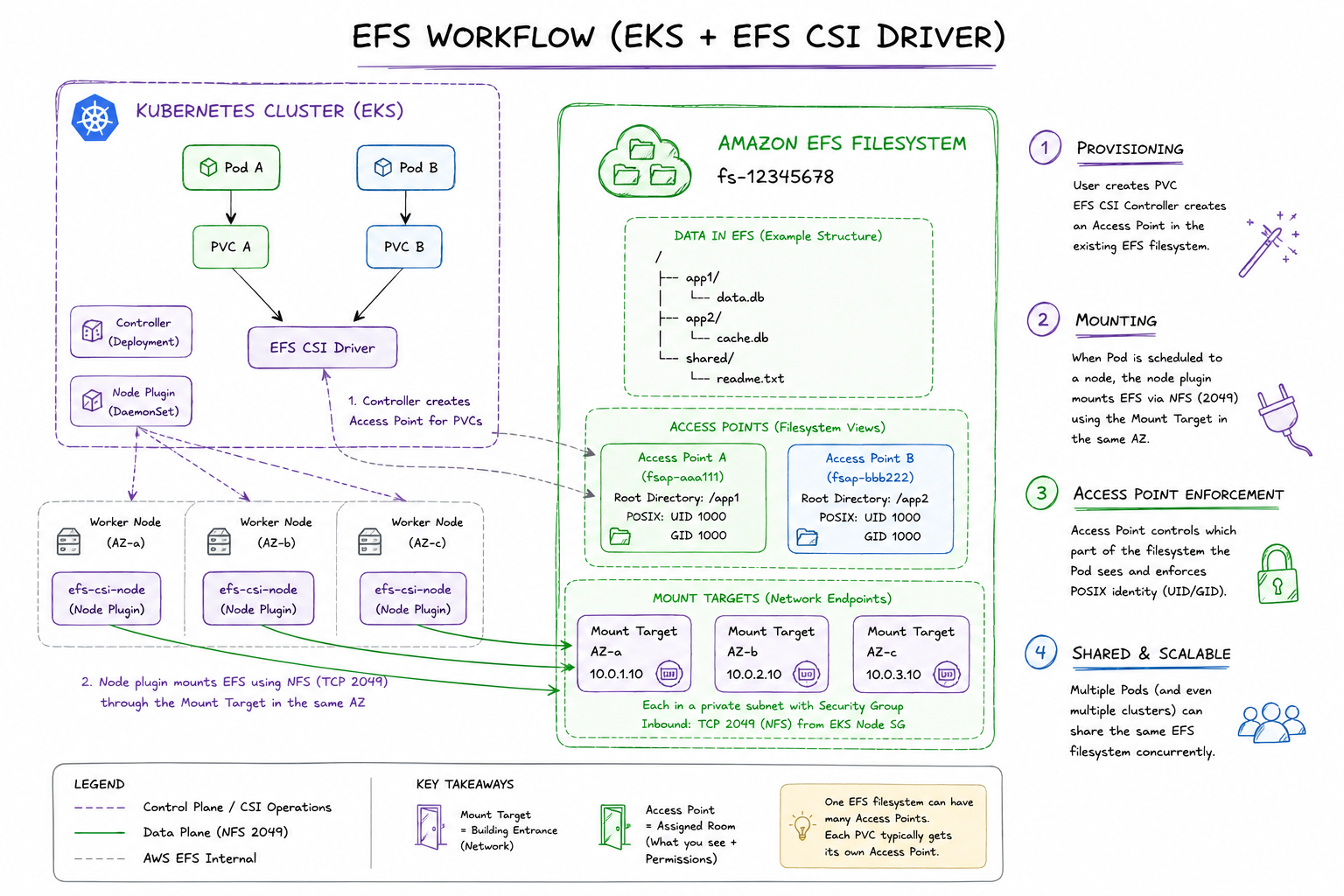
EFS Components Explained
EFS Filesystem
The filesystem is the actual storage.
Mount Targets
Mount Targets provide network connectivity.
Think of them as the entrances to an office building.
Access Points
Access Points provide filesystem views and permissions.
Think of them as assigned rooms inside the office building.
Who Creates What?
| Resource | Created By |
|---|---|
| EFS Filesystem | Platform Team / Terraform |
| Mount Targets | Platform Team / Terraform |
| Security Groups | Platform Team / Terraform |
| Access Points | EFS CSI Controller |
| PV (Dynamic) | EFS CSI Controller |
| PV (Static) | User |
Dynamic Provisioning Workflow
PVC
 ↓
EFS CSI Controller
 ↓
Create Access Point
 ↓
Create PV
 ↓
Bind PVC| Created by CSI Driver | NOT Created by CSI Driver |
|---|---|
| Access Point | Filesystem |
| PV | Mount Targets |
| Security Groups |
Controller vs Node Plugin
| Controller | Node Plugin |
|---|---|
| Dynamic provisioning | Mounting EFS into pods |
| Access Point creation | NFS operations |
| PV creation |
The Most Useful Mental Model
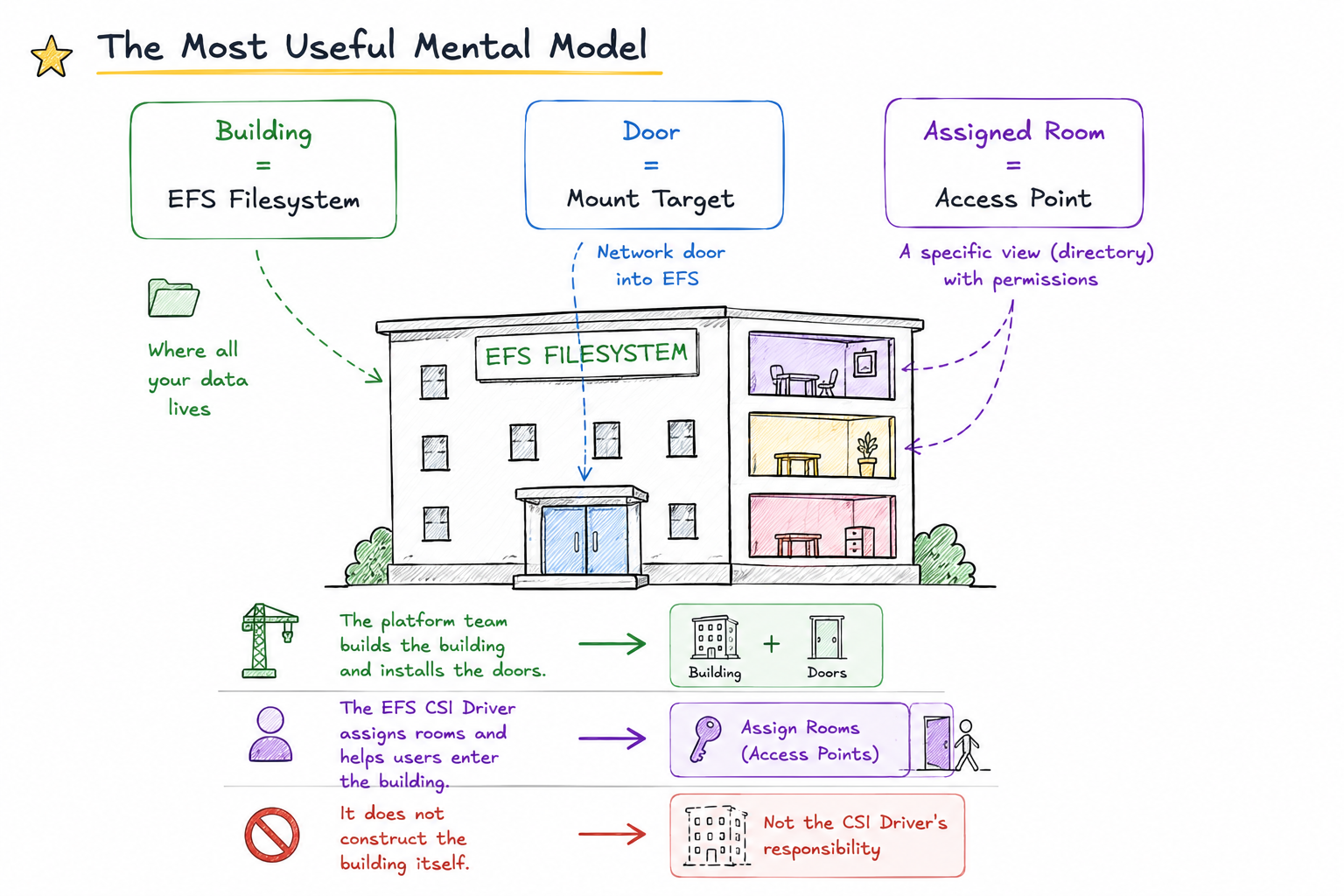
The platform team builds the building and installs the doors.
The EFS CSI Driver assigns rooms and helps users enter the building.
It does not construct the building itself.
Conclusion
Infrastructure resources:
- EFS Filesystem
- Mount Targets
- Security Groups
Application resources:
- Access Points
- PVCs
- PVs
The CSI Driver sits in the middle, bridging Kubernetes storage requests with AWS EFS APIs.